Small House Storage Ideas
A practical step-by-step guide to small house storage ideas, including preparation, instructions, common issues, tips, and next steps.
Small House Storage Ideas
This guide explains how to approach small house storage ideas, including the preparation, practical steps, common mistakes, and final checks that help you finish with confidence.
Before You Start
Step-by-Step Instructions
Quick Reference
Common Problems When You Implement Small House Storage Ideas
Even with the best intentions, you might run into a few challenges when trying to organise a small house. Knowing these common pitfalls can help you avoid them.
Buying Storage Before Decluttering
A frequent mistake is rushing out to buy fancy storage solutions before you've thoroughly decluttered. This often leads to buying items that don't fit your actual needs or, worse, simply storing clutter more neatly. You end up with a house full of storage bins that are themselves taking up valuable space.
Fix: Always complete Step 1 (Declutter Ruthlessly) before purchasing any new storage. Once you know exactly what you're keeping, you can measure and buy specific solutions that fit those items and your available space.
Not Measuring Accurately
Buying a shelf unit that's an inch too wide or storage boxes that are too tall for your cabinet can be frustrating and wasteful. Eyeballing dimensions rarely works well in a small space where every millimetre counts.
Fix: Invest a few minutes with a measuring tape. Measure the width, height, and depth of the space you intend to organise. Keep a small notebook with these dimensions handy when shopping. Don't forget to account for door swings or other obstructions.
Overlooking Vertical Space
Many people focus only on horizontal surfaces, leaving walls and the upper parts of rooms underutilised. This is a missed opportunity in any small home.
Fix: Consciously look up in every room. Can you add shelves above a doorframe? Is there space for a tall, narrow bookcase? Could you install hooks for coats or bags on an empty wall? Think about how to stack items or use wall-mounted solutions.
Stuffing Instead of Sorting
Sometimes, the desire for a tidy appearance leads to simply stuffing items into a drawer or container without proper sorting. While it looks neat on the outside, it makes it impossible to find things later and prevents true organisation.
Fix: Categorise items as you put them away. Use drawer dividers, small baskets, or clear containers to keep similar items together. If a container is overflowing, it's a sign you either need to declutter further or find a larger, more suitable storage solution for that category of items.
Difficulty Letting Go of Items
Emotional attachment to possessions can be a significant hurdle, especially in a small home where every item has a greater impact. This can lead to keeping things "just in case" or out of guilt, contributing to ongoing clutter.
Fix: Be kind to yourself, but firm. Start by letting go of easy items first. For sentimental items, consider taking a photo of them before donating or giving them away. For "just in case" items, ask yourself when you last needed it. If it's been over a year, you probably won't need it soon. Remind yourself that letting go creates space for things you truly love and use.
Advanced Tips for Small House Storage Ideas
Once you've mastered the basics, these advanced techniques can take your small house organisation to the next level, offering creative and often custom solutions.
Custom Built-Ins and Niche Solutions
For truly unique or awkward spaces, custom-built storage can be a game-changer. This might involve building shelves into a wall recess, creating bespoke cabinetry around a chimney breast, or fitting a desk into an unused corner. While more costly initially, built-ins perfectly utilise every available millimetre and often look seamless, making the room feel larger and more integrated. Consult with a local carpenter or handy person for possibilities.
Zone Planning and "Landing Strips"
Divide your small house into functional zones. For example, create an "entryway landing strip" near your front door with hooks for keys, a small shelf for mail, and a spot for shoes. This prevents daily clutter from migrating further into your living space. Similarly, designate zones for reading, working, or dining within a single room, ensuring each area has its own compact, dedicated storage.
Hidden and Disguised Storage
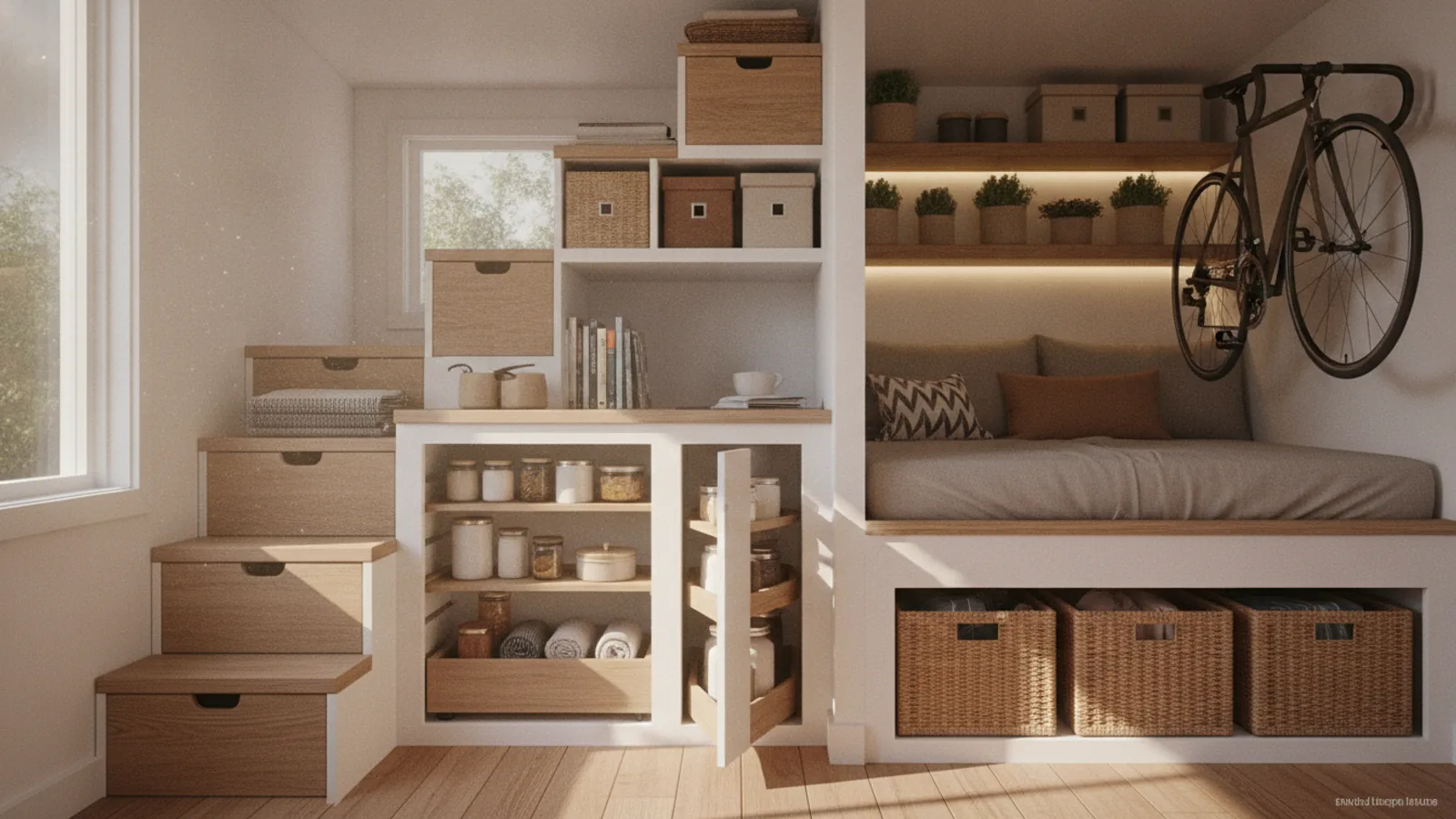
Think beyond obvious cupboards. Can you install drawers in the kickboards beneath kitchen cabinets? What about a false drawer front in your bathroom vanity that pulls out to reveal a thin storage compartment for toothbrushes? Consider a framed mirror that slides open to reveal a shallow cabinet for jewellery or medicines. The more you can hide items behind closed doors or within existing structures, the cleaner and more spacious your small house will feel.
Portable and Modular Storage
For items you need to access sometimes but not always, consider portable storage. Rolling carts can store craft supplies or office items and be tucked away when not in use. Modular shelving units can be rearranged to adapt to changing needs or moved to different rooms as required. This flexibility is invaluable in dynamic small living spaces.
Digital Inventory and Documentation
For very small homes with limited physical storage, consider digitally documenting items you rarely use but want to keep (e.g., old photos, important documents, sentimental cards). Scan them or take high-quality photos and store them on a cloud service. This allows you to keep the memory or information without the physical item taking up space. For physical items you must keep but store off-site (e.g., in a friend's attic or a small storage unit), create a digital inventory with photos and descriptions so you know exactly what you have without needing to dig through boxes.
Small House Storage Ideas FAQ
What is the best way to store things in a small house?
The best way to store things in a small house is to first declutter aggressively, keeping only essential and loved items. Then, focus on utilising vertical space with shelves and wall-mounted units, investing in multi-functional furniture (like ottomans with storage or beds with drawers), and making use of often-overlooked spaces such as under beds, stairs, and cabinet tops.
How do you organise a small space with too much stuff?
Start by acknowledging that "too much stuff" is the primary problem, not a lack of storage. Begin with a thorough decluttering process, sorting items into keep, donate/sell, and discard piles. Once you've significantly reduced your possessions, then you can apply strategic organisation techniques like vertical storage, drawer dividers, and multi-functional furniture to store what remains efficiently.
How can I store things without a closet?
If you don't have a traditional closet, you can use freestanding wardrobes or armoires, which offer enclosed hanging and shelf space. Garment racks can provide hanging space, often with shelves or drawers below. Utilise under-bed storage for clothes and accessories, and install wall-mounted hooks, shelves, or floating clothes rails to create open storage solutions.
How do you store seasonal items in a small house?
For seasonal items (like holiday decorations, winter coats, or summer gear), the key is to store them in less accessible spots, such as under the bed in flat containers, on high shelves in wardrobes, or in the top of a storage ottoman. Vacuum storage bags are excellent for compressing bulky seasonal clothing or bedding, saving significant space until they are needed again.
What items should you not store?
You should avoid storing anything you haven't used in over a year (unless it's genuinely sentimental or a once-in-a-lifetime item), broken items you haven't fixed, clothes that don't fit, or duplicates of items you already have. Also, avoid keeping items "just in case" if you can easily replace them or if they are unlikely to be needed soon.
Final Checklist for Small House Storage Ideas
Before you consider your small house storage project complete, run through this checklist to ensure you've covered all the key aspects.
Next Actions:
Once you've completed your initial storage overhaul, remember that organisation is an ongoing process. Schedule a quarterly review of one room or area to ensure clutter isn't creeping back in. Consider making a list of any custom solutions you might want to implement in the future and research local tradespeople for quotes. Share your tips with friends and family in similar situations, fostering a community of tidy small-home dwellers.