New Build Home Lighting Guide
A practical step-by-step guide to new build home lighting guide, including preparation, instructions, common issues, tips, and next steps.
New Build Home Lighting Guide
This guide explains how to approach new build home lighting guide, including the preparation, practical steps, common mistakes, and final checks that help you finish with confidence.
Before You Start
Getting your new build home lighting right from the start saves time, money, and hassle later on. It's about more than just putting lights in; it’s about making sure each room works exactly how you need it to, feels inviting, and showcases your home beautifully. New builds often come with basic lighting packages, which might not meet all your needs. Proactive planning allows you to upgrade, customise, and create a lighting scheme that truly reflects your lifestyle and preferences.
What You Need
Safety, Timing, or Context Checks
Step-by-Step Instructions
Quick Reference
Common Problems When You Plan New Build Home Lighting
Even with careful planning, common pitfalls can occur. Knowing what to watch out for can save you headaches later.
Too Few Sockets and Switches
Many new builds come with a minimal number of electrical sockets. This often leads to reliance on extension cords, which are unsightly and can be a fire hazard. Similarly, not enough light switches, or switches in inconvenient locations, can make using your lighting frustrating. Always factor in more sockets than you think you'll need, especially in living areas, kitchens, and bedrooms. Consider two-way or intermediate switching for long hallways or staircases so you can turn lights on or off from multiple points.
Poor Light Placement Leading to Shadows
A single central ceiling light often casts harsh shadows, especially when you're working at a kitchen counter or desk. This is where the concept of layered lighting becomes crucial. Relying solely on downlights without considering task or accent lighting can also lead to an unevenly lit space. Ensure task lighting is directly over work surfaces, and ambient lighting is spread evenly.
Wrong Colour Temperature
Using the wrong colour temperature for a room's function can drastically affect its feel. A bright, cool white (4000K) in a cosy living room can feel stark and unwelcoming, while a very warm white (2700K) in a kitchen might not provide enough clarity for food preparation. Mix and match carefully: warmer tones for relaxation, cooler for tasks.
Lack of Dimming Options
Having lights that are either "on" or "off" removes flexibility. Dimmable lighting allows you to adjust the brightness to suit your mood, the time of day, or the activity. It's a common regret not to include dimmers, as retrofitting them can be more complex and costly.
Not Enough Layers of Light
As discussed earlier, a single type of light source rarely provides optimal illumination for a whole room. Neglecting task, accent, or decorative lighting leaves rooms feeling flat, less functional, and uninviting. Aim for at least three layers in primary living spaces.
Forgetting Outdoor Lighting
Often an afterthought, outdoor lighting is vital for safety, security, and aesthetics. Without planned exterior light points, you might end up with temporary, less effective solutions. Think about lighting for paths, porches, patios, and security at the back and sides of the house.
Advanced Tips for New Build Home Lighting Guide
Once you've mastered the basics, consider these advanced techniques to elevate your new build's lighting design to the next level.
Smart Home Integration
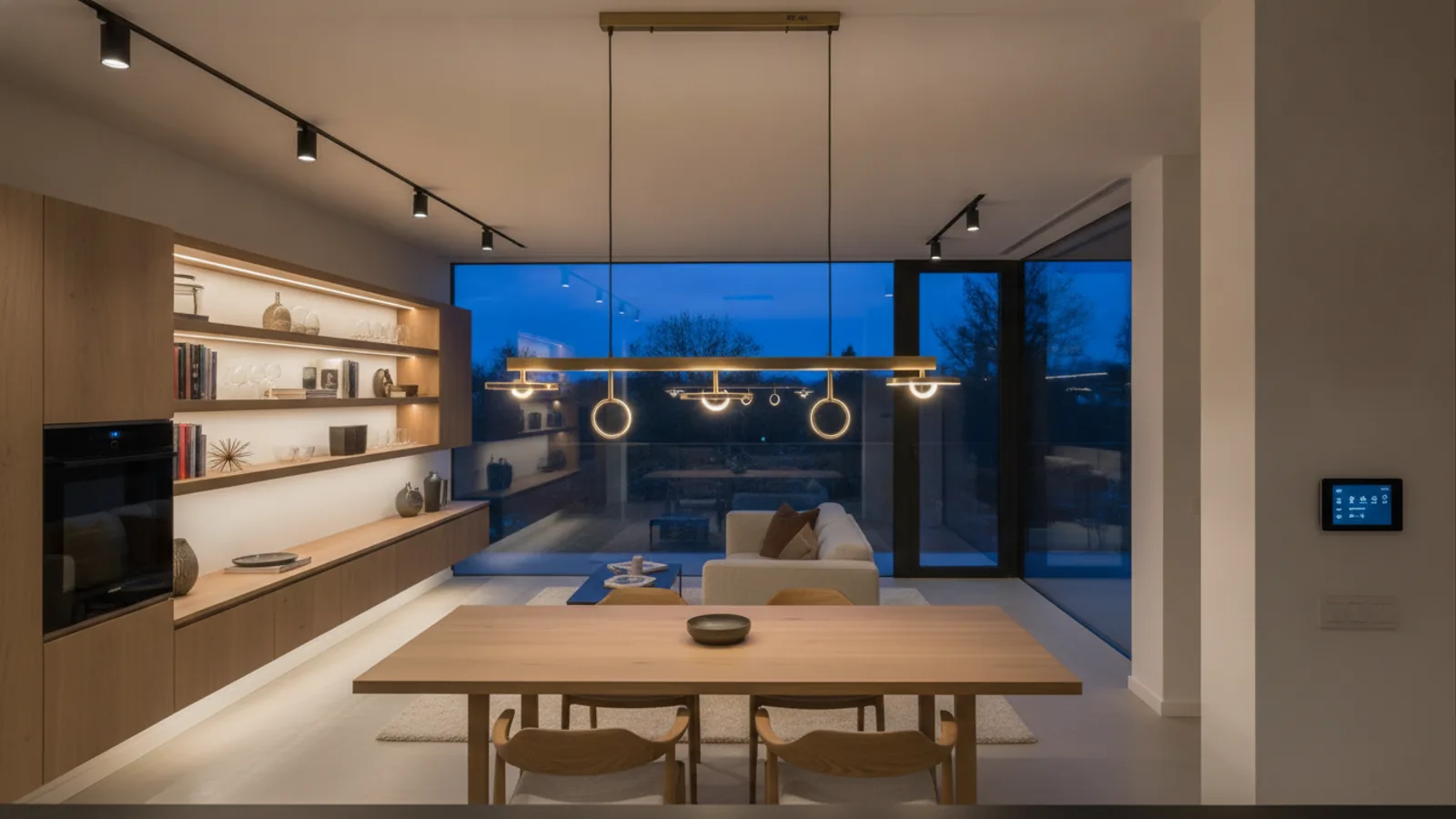
Consider incorporating smart lighting systems. These allow you to control lights from your phone, voice assistant, or even automatically based on schedules, occupancy, or time of day. You can often change colour temperature, dimming levels, and create custom scenes (e.g., "movie night" or "dinner party") for different moods. Planning for smart lighting from the start means ensuring compatible wiring or central hubs are included, even if you just install smart bulbs initially.
The "Five-Light Layers" Approach
Beyond ambient, task, and accent, designers often talk about five layers:
Incorporating architectural lighting requires careful planning during the build, but the effect can be stunning.
Feature Lighting for Art and Architectural Details
If you have specific artworks, niches, or architectural details you want to highlight, plan for dedicated accent lighting. This could include recessed adjustable spotlights, picture lights, or even concealed LED strips. Precise placement is key to avoid glare and ensure the light beautifully illuminates the feature.
Future-Proofing with Empty Conduits
If your budget doesn't allow for extensive advanced lighting now, consider installing empty conduits (plastic pipes) within walls and ceilings during the first-fix stage. These pathways allow you to easily pull new electrical cables through in the future without having to chase into walls. This is particularly useful for future smart home upgrades, additional wall lights, or garden lighting.
Garden and Landscape Lighting Design
Extend your lighting design beyond the house. Thoughtful garden lighting can transform your outdoor space, enhance security, and highlight landscaping features. Consider uplights for trees, path lights, deck lights, and subtle lights for seating areas. Ensure these are on separate circuits for flexible control and use outdoor-rated fixtures suitable for the GB climate.
Consider Natural Light
While this guide focuses on artificial light, always consider how natural light enters each room. Position your artificial lights to complement, rather than fight, the natural light sources. Brightest artificial lights might be needed in north-facing rooms, while south-facing rooms might require less during the day.
New Build Home Lighting Guide FAQ
What is a lumen and why is it important?
A lumen (lm) is a measure of the total amount of visible light emitted by a light source. It's important because it tells you how bright a bulb actually is, unlike wattage, which only indicates energy consumption. For LEDs, a lower wattage can produce more lumens than an older incandescent bulb, so always check the lumen rating for brightness.
What is light colour temperature and why does it matter?
Light colour temperature, measured in Kelvins (K), describes the hue of the light emitted by a bulb. It matters because different temperatures create different moods and affect how colours appear in a room. Warm white (2700K-3000K) feels cosy and relaxing, while cool white (3500K-4000K) is more energising and clearer for tasks. Choosing the right colour temperature for each room is crucial for comfort and function.
Can I change lighting after moving into a new build?
Yes, you can change light fittings after moving in, but making significant changes to the electrical layout (e.g., adding new ceiling points, moving switches) becomes much more complex and expensive. It usually involves chasing into walls, re-wiring, re-plastering, and re-decorating. Simple changes like swapping a pendant light for a different one, or replacing existing bulbs, are easy.
How many lights do I need per room?
There's no single answer, as it depends on the room's size, function, and desired ambience. Instead of a number, focus on layers: aim for at least two to three layers of light (ambient, task, accent) in most living spaces. For example, a living room might have a main ceiling light (ambient), a floor lamp for reading (task), and a picture light (accent). A kitchen might have downlights (ambient), under-cabinet lights (task), and a decorative pendant over an island (decorative/ambient).
Should I use LEDs in my new build?
Absolutely, yes. LEDs (Light Emitting Diodes) are highly recommended for new builds due to their superior energy efficiency (saving on electricity bills), extremely long lifespan (reducing maintenance), and wide range of colour temperatures, dimmability, and smart features. While the initial cost of LED fittings or bulbs might be slightly higher, the long-term savings and benefits far outweigh them.
What if I don't like the standard light switches provided by the builder?
You can often request an upgrade to different styles of light switches (e.g., chrome, brushed steel, or smart switches) from your builder's options list. If you want a specific brand or style not offered, you might need to arrange for these to be fitted by your own electrician after completion, ensuring they meet regulations and your builder approves any necessary pre-wiring.
Final Checklist for New Build Home Lighting Guide
Use this checklist to ensure you've covered all the key aspects of planning your new build home lighting.
By following this comprehensive guide, you'll be well on your way to creating a beautifully lit and highly functional new build home that you'll love for years to come.